


 뉴욕타임즈
뉴욕타임즈

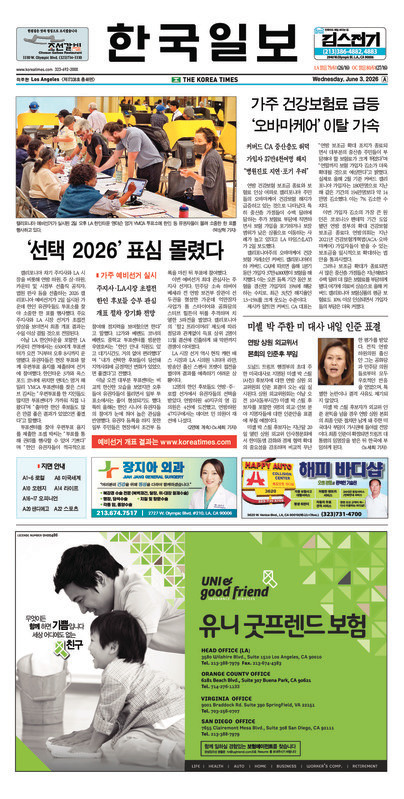
- 韓 6·3 지방선거, 방송3사 출구조사… 민주 11곳·국힘 1곳 승리, 경합 4곳
- 데이브 민·영 김 결선행… LA 시장 배스 1위
- 가주 건강보험료 급등 ‘오바마케어’ 이탈 가속
- 미셸 박 주한 미 대사 내일 인준 표결
- [재외선거 제도개선 언제 되나] ‘투표하러 비행기 타는 시대’ 끝낼까… 우편투표 공론화
- 고메스 ‘부적절 관계’ 의혹 하원 윤리위 조사
close
- 첫 주택구매 ‘숨통’… 정부 지원 역대 최대
- ‘미토스’ 접속권 확대… 15개 국가·150개 기관
- 구인규모 예상밖 증가… 2년 만에 최대
- “심각한 위험 은폐하고 챗GPT 출시”
- 실질임금 감소 시작… 물가 압박 여파
- 알파벳, 유상증자 발표… AI 투자 위해 800억달러
close

- ‘2경기 연속 쾌승!’…홍명보호, 엘살바도르 상대 최종 평가전
- 김시우, PGA 투어 메모리얼 토너먼트서 우승 재도전
- ‘올해 2승’ 김효주 등 한국 선수 23명 출격
- 미열에 쉬던 김태현도 가세…26인 태극전사 처음으로 전원 훈련
- ‘슈퍼컴퓨터 깜짝 예측’ 韓 월드컵 16강 확률 대반전, 일본보다 높다
- 더 이상 ‘우승 들러리’ 사절! 이강인, ‘파리 생활 청산’ 결단→아틀레티코 이적 ‘급물살’… 월드컵 이후 떠난다
close
- 수많은 생선 썩히며 새로운 맛 찾았다… ‘피시 샤퀴테리’ 도전기
- 정어리 없는 사르데냐, 올리브 열리는 서귀포
- 일본인데 ‘사케’가 없다? 오키나와에선 ‘아와모리’ 마신다
- 슬기로운시니어생활 58회
- 한국적 닭맛 보여준 야키토리… 냉철한 눈으로 ‘살아남을 맛’ 찾았다
- 배에 힘주면 뇌가 청소된다 치매 막는 ‘3초 복근 펌프’ 움직임
close
- 대학 학비 마련 막막하다면?… 민간 대출로 부족분 충당
- 졸업생들에게 주는 메세지
- “연방정부 학자금 융자제한 적신호”
- AI 시대, 우리 아이가 알아야 할 10가지 기술
- 38만달러짜리 졸업장, 누가 감당할 수 있나
- ‘못 받을거야’ 섣부른 짐작 금물… 대학 재정보조 신청 요령
close
- “찬물 샤워가 답 아니었다”… 폭염 속 체온 뚝 떨어뜨리는 의외의 ‘맥박점’
- 암수술 후 ‘림프 부종’ 나타나면 병원으로 달려가세요
- [건강포커스] “단백질 섭취 적은 노인, 근력약화·일상생활 장애 위험 높아”
- [임영빈 박사 건강 칼럼] 파킨슨병 치료, 어렵지만 할 수 있다.
- “여름에 무조건 챙겨 먹어라”… 수박 속 성분 심혈관 살린다
- 양치 ‘333법칙’ 믿고 따랐는데… 오히려 이빨 다 상할 수 있다는데
close

- 이름만 들어도 설레는 예술과 낭만, 정열의 나라를 가다
- 빌리 아일리시 라이브 인 3D‘경험’의 경계를 허물다
- “절대 돌아가지 않을 거야”… 자유를 향한 두 여자의 질주
- 휠체어 타고 바다로? 안 보여도 걷지 못해도 가능한 ‘무장애 여행’
- 아름답고 달콤한 포복절도할 로맨틱 코미디
- 다양한 장르를 잘 조율한 상큼하고 따스한 인물 탐구 영화
close

- ‘렌트 백’으로 계약부터 성사?…예상치 못한 위험 더 커
- ‘편안함·기능성’ 강조… 최신 웰빙 주거 트렌드
- 상업 건물의 진짜 몸값과 전략
- ADU, 이제는 선택이 아닌 부동산 전략
- 비싸지만 비싼 게 아니다… 신축주택 고려 이유
- 신축주택 ‘빌더 워런티’… 보장 ‘범위·기간’ 등 확인해야
close

- MC몽, 의혹 재차 반박 “차가원과 밀월여행? ‘PD수첩’ 검증도 없었다”
- ‘진태현♥’박시은, 입양딸 ‘셋’..그 중 한 명만 공개한 이유 “허락 필요”
- “이런 등기부등본은 처음” 전문가도 절레..이승기, 해명에도…
- ‘6월의 신부’ 문채원, 결혼 앞두고 웨딩드레스 자태 공개
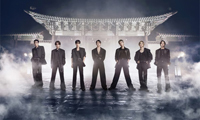
- BTS 진·코르티스→韓귀화 에바, ★들의 투표 인증 릴레이
- ‘우지원 딸’ 우서윤, 미스코리아 본선 진출..우월한 ‘선’ 비주얼 포착
close


What we can do, for now, is set up a matrix to help assess the Trump era as it proceeds, in which each appointment and policy move gets plotted along two axes. The first axis, the X-axis, represents possibilities for Trumpist policy, the second, the Y-axis, scenarios for Trump’s approach to governance.
The policy axis runs from full populism at one end to predictable conservative orthodoxy on the other. A full populist Trump presidency would give us tariffs and trade wars, an infrastructure bill that would have Robert Moses doing back flips, a huge wall and E-Verify and untouched entitlements and big tax cuts for the middle class. On foreign policy it would be Henry Kissinger meets Andrew Jackson: Détente with Russia, no nation-building anywhere, and a counterterrorism strategy that shoots, bombs and drones first and asks questions later.




In an orthodox-conservative Trump presidency, on the other hand, congressional Republicans would run domestic policy and Trump would simply sign their legislation: A repeal of Obamacare without an obvious replacement, big tax cuts for the rich, and the Medicare reform of Paul Ryan’s fondest dreams. On foreign policy, it would offer hawkishness with a dose of idealistic rhetoric – meaning brinkmanship with the Russians, not a rapprochement, plus military escalation everywhere.
The second axis, the possibilities for how Trump governs, runs from ruthless authoritarianism at one end to utter chaos at the other. Under the authoritarian scenario, Trump would act on all his worst impulses with malign efficiency. The media would be intimidated, Congress would be gelded, the F.B.I. and the I.R.S. would go full J. Edgar Hoover against Trump’s enemies, the Trump family would enrich itself fantastically — and then, come a major terrorist attack, Trump would jail or intern anyone he deemed a domestic enemy.
At the other end of this axis, Trump and his team would be too stumbling and hapless to effectively oppress anyone, and the Trump era would just be a rolling disaster — with frequent resignations, ridiculous scandals, Republicans distancing themselves, the deep state in revolt, the media circling greedily, and any serious damage done by accident rather than design.
Trump’s transition — the process, the appointees, the tweets — can be charted along both axes. On policy, much of his cabinet falls closer to the conventional conservative end, with appointees like Tom Price and Betsy DeVos and Rick Perry who would be at home in a Ted Cruz or Marco Rubio or even Jeb! administration.
On the other hand, some of his cabinet picks are a little more ideologically unknowable (like Steven Mnuchin at Treasury), and his inner circle remains highly unconventional. Stephen K. Bannon is intent on remaking the G.O.P. along nationalist lines, Jared Kushner and Ivanka Trump seem eager for their paterfamilias to negotiate with Democrats, Peter Navarro is girding for a trade war with China. And Trump’s foreign policy choices — especially Rex Tillerson at State — seem closer to full-Trumpist realpolitik than to Reaganism-as-usual.
On the governance axis, the president-elect’s strong-arming of the private sector, his media-bashing tweets, and his feud with the intelligence community all hint at an authoritarian timeline ahead. Likewise, other fact patterns — that Congressional Republicans are mostly supine, that the stock market has surged — suggest that Trump could be authoritarian, corrupt and politically effective.
But anyone who fears incompetence more than tyranny has plenty of evidence as well. Trump’s tweets might be a sign, not of an incipient autocrat, but of an unstable narcissist who will undermine himself at every step. He has no cushion in popular opinion: If things go even somewhat badly, his political capital will go very fast indeed. He has plenty of hacks, wild cards and misfit toys occupying positions of real responsibility — and his White House has already had its first sex scandal!Then, finally, there is the question of how the axes interact. A populist-authoritarian combination might seem natural, with Trump using high-profile deviations from conservative orthodoxy to boost his popularity even as he runs roughshod over republican norms.
But you could also imagine an authoritarian-orthodox conservative combination, in which Congressional Republicans accept the most imperial of presidencies because it’s granting them tax rates and entitlement reforms they have long desired.
Or you could imagine a totally incompetent populism, in which Trump flies around the country holding rallies while absolutely nothing in Washington gets done … or a totally incompetent populism that ultimately empowers conventional conservatism, because Trump decides that governing isn’t worth it and just lets Paul Ryan run the country.
As for what we should actually hope for – well, the midpoint of each axis, the center of the matrix, seems like the sweet spot for the country: A Trump presidency that’s competent-enough without being dictatorial, and that provides a needed populist corrective to conservatism without taking us all the way to mercantilism or a debt crisis.
But this is Donald Trump we’re talking about, so a happy medium seems unlikely. Along one axis or the other, bet on the extremes.

<ROSS DOUTHAT>
로컬뉴스
more
주택가격 상승세 지속 실질가치는 연속(16개월) 하락
샌디에고 지역 주택 가격이 올해도 상승세를 이어가고 있는 가운데, 높은 인플레이션과 모기지 금리 부담으로 실질적인 자산 가치는 오히려 감소한 …

아리랑 합창단 “아름다운 선율에 사랑 심어요”
오렌지카운티 한인 커뮤니티에서 잘 알려져 있고 가장 오래된 여성 합창단 중의 하나인 ‘아리랑 합창단’(단장 김경자)이 올해로 창립 31주년을 …
한양대 최고 경영자 과정 골프대회 성황
한양대학교 글로벌최고경영자과정(HGCEO) 총동문회(회장 폴 김)는 지난달 22일 코요테 힐스 골프클럽에서 80여 명의 동문 및 13기 과정 …
SD 한인성당 ‘본당의 날’ 맞아 야외미사 성료
지난 31일 샌디에고 한인성당(주임 민광호 요셉 신부)은 본당의 날을 맞아 약 350명의 신자들이 참석한 가운데, 어드미럴 베이커 파크에서 미…
이주희 음악학원 제12회 자선 음악회 성료
지난달 17일 제이에치음악학원(JH Music Studio)의 이주희 원장과 학생들은 에드브라운센터에서 제12회 자선음학회를 개최했다. 글로벌…
사람·사람들
more

한국일보 안내광고
- 렌트/리스/하숙
- 구인구직
- 중고차
- 전문업체



- 1
 [6·3 지선] 오세훈, 출구조사 뒤집고 당…
 - 2
 ‘의회승인없는 이란戰 중단’ 결의안 하원통과…
 - 3
 캘리포니아 주지사 선거 초접전…공화당 힐튼 …
 - 4
 피 말렸던 초접전 드라마…서울시장 아침 대반…
 - 5
 스페이스X, IPO 공모 750억달러…그린슈…
 - 6
 이스라엘·레바논, 美중재로 휴전 이행 합의……
 - 7
 AI 붐에 올해 美 전환사채 발행 사상 최대…
 - 8
 루비오 美 국무 “검열로 톈안먼 사태 과거 …
 - 9<종교인 칼럼> 임택규 목사/ 산호세 동산교회
- 10
 오픈AI “州 AI규제 통합해 표준 만들자”…
- 11
 차기총리, 정성호·한성숙·강훈식 3인압축…李…
 - 12마릴린 먼로 탄생 100주년… 기네스 기록
- 13
 구글, 유증 123조원→130조원 확대…강한…
 - 14
 연준 베이지북 “물가 압력 확산… ‘저채용·…
 - 15
 ‘욱일기 응원’ 영상 올린 유튜버 “무지했다…
 - 16
 ‘손흥민·조규성 멀티골’ 지켜본 오현규, 직…
 - 17[미국은 지금] 대이란 전쟁의 책임이 몰고올 후폭풍 1
- 18
 샌프란시스코 로웰고 ‘한국어 쇼 2026’ …
 - 19
 우크라 ‘러시아판 다보스포럼’ 앞서 상트페테…
 - 20
 새크라멘토 만남의 집 개소
- 21
 살리나스 영광장로교회, 한재현 목사
 - 22한국 천주교회 신규 사제 77명
- 23
 美운용자산 1조달러 돌파 ETF 탄생… “E…
 - 24
 북가주한인간호사협회 업무협약 체결
 - 25퀴어축제 참석 목사 ‘출교’ 무효판결 1
- 26
 한인연합감리교회, ‘강단 교환’ 실시
 - 27여름철 3개월 집중 수행, 조계종 ‘하안거’돌입”
- 28스카이 리버 카지노,다양한 여름 프로모션
- 29
 텍사스 소도시, 머스크의 ‘테라팹’ 부지에 …
 - 30
 첫 주택구매 ‘숨통’… 정부 지원 역대 최대








오피니언
 정숙희 논설위원
다니엘 하딩, LA 필의 새 음악감독
 메건 매카들 워싱턴포스트 칼럼니스트
 [메건 매카들 칼럼] AI 소설은 새로운 패스트푸드
- 김동찬 시민참여센터 대표
[미국은 지금] 대이란 전쟁의 책임이 몰고올 후폭풍
- 이명숙 수필가
[수요에세이] 바람개비
- 한영일 / 서울경제 논설위원
[만화경] 외면받는 선거홍보물
 민경훈 논설위원
워싱턴의 ‘개구리와 전갈’

카운트다운 쿠바 붕괴
 나태주
나태주 ‘천천히 가는 시계’
 옥세철 논설위원
죽어가는 러시아가 더 위험하다고…
1/3
지사별 뉴스

팰팍 시장 민주당 예비선거서 폴 김 승리
선거 막판까지 상호 비방과 네거티브 공방으로 치열한 과열 양상을 보였던 뉴저지주 팰리세이즈팍(팰팍) 시장 민주당 예비선거에서 결국 폴 김 시장…
한방 침술 건보 의무화 법안 뉴욕주 상·하원 최종 통과

엘리콧시티 상가, 범죄·사칭 행각 기승
한인 상가가 밀집한 엘리콧시티 지역에서 무단침입과 사칭 행각, 절도 등 범죄가 잇따라 발생, 상인들의 각별한 주의가 요구된다.최근 제보에 따르…
페어팩스 카운티 고교 졸업 시즌

데이브 민·영 김 결선행… LA 시장 배스 1위
2일 치러진 캘리포니아 예비선거에서 한인 연방하원 현역 의원들인 데이브 민(민주) 의원이 가주 47지구 1위로, 영 김(공화) 의원이 가주 4…
살리나스 영광장로교회, 한재현 목사






















 | ||
|



- 로그인
- 회원가입
Koreatimes.com 서비스는 Ktown1st.com과 통합계정입니다. 계정이 없으신 분은 회원가입을 해 주세요.
.png)



댓글 안에 당신의 성숙함도 담아 주세요.
'오늘의 한마디'는 기사에 대하여 자신의 생각을 말하고 남의 생각을 들으며 서로 다양한 의견을 나누는 공간입니다. 그러나 간혹 불건전한 내용을 올리시는 분들이 계셔서 건전한 인터넷문화 정착을 위해 아래와 같은 운영원칙을 적용합니다.
자체 모니터링을 통해 아래에 해당하는 내용이 포함된 댓글이 발견되면 예고없이 삭제 조치를 하겠습니다.
불건전한 댓글을 올리거나, 이름에 비속어 및 상대방의 불쾌감을 주는 단어를 사용, 유명인 또는 특정 일반인을 사칭하는 경우 이용에 대한 차단 제재를 받을 수 있습니다. 차단될 경우, 일주일간 댓글을 달수 없게 됩니다.
명예훼손, 개인정보 유출, 욕설 등 법률에 위반되는 댓글은 관계 법령에 의거 민형사상 처벌을 받을 수 있으니 이용에 주의를 부탁드립니다.
Close
x